


By Jiaxing Li
HONG KONG, June 4 (Reuters) – The dollar clung to its recent strength near a two-month high on Thursday as fresh Gulf hostilities sent oil prices higher and sapped risk appetite, while the Japanese yen hovered near the key 160 level that kept traders on intervention alert.
Iranian attacks on Kuwait damaged its airport and injured dozens on Wednesday while the U.S. military carried out strikes near the Strait of Hormuz, straining a shaky ceasefire and dimming hopes for a diplomatic halt to the war.
The euro stood at $1.1604, and the British pound traded at $1.3424, both largely flat so far in Asia.
The risk-sensitive Australian dollar was steady at $0.7132, and the New Zealand dollar rose 0.2% to $0.5872 to rebound from a one-week low.
The dollar index, which measures the greenback against a basket of currencies including the yen and the euro, was a shade higher at 99.47, after hitting the strongest level since April 7 in previous session.
“The USD’s safe haven status appears to be strengthening again” with oil prices and global yields rebounding on geopolitical tensions, said Sim Moh Siong, FX strategist at OCBC.
“There is no strong case for a bearish USD,” he said, adding the bank stays neutral and expects a firm but rangebound greenback.
On the data front, a survey on Wednesday showed a measure of prices paid by U.S. services businesses jumped to the highest level in nearly four years last month, cementing economists’ views that the Federal Reserve would hold interest rates unchanged well into next year.
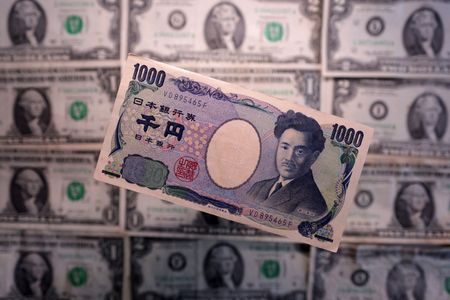
The Japanese yen fetched 159.91 per dollar, off lows on Wednesday that pushed it past the critical 160-per-dollar mark for the first time since April 30, triggering verbal warnings from authorities.
The 160 level is widely seen in markets as a line in the sand for potential official intervention.
Bank of Japan Governor Kazuo Ueda said the central bank must discuss the pros and cons of raising interest rates if inflationary risks outweigh downside economic risks, in comments that signal a high chance of a rate hike this month.
“He did as much groundwork as possible at this stage” despite stopping short of explicitly signalling a hike at the June meeting, wrote Naohiko Baba, head of Japan research and chief Japan economist at Barclays.
“The hawkish tone has strengthened further, including a clear expression of concern about behind-the-curve risk. We stick to our June rate hike call.”
Bitcoin slid to a four-month trough and was 2.8% lower at $63,119.5, while ether similarly hit a four-month low and was at $1,786.
(Reporting by Jiaxing LiEditing by Shri Navaratnam)
Brought to you by www.srnnews.com