


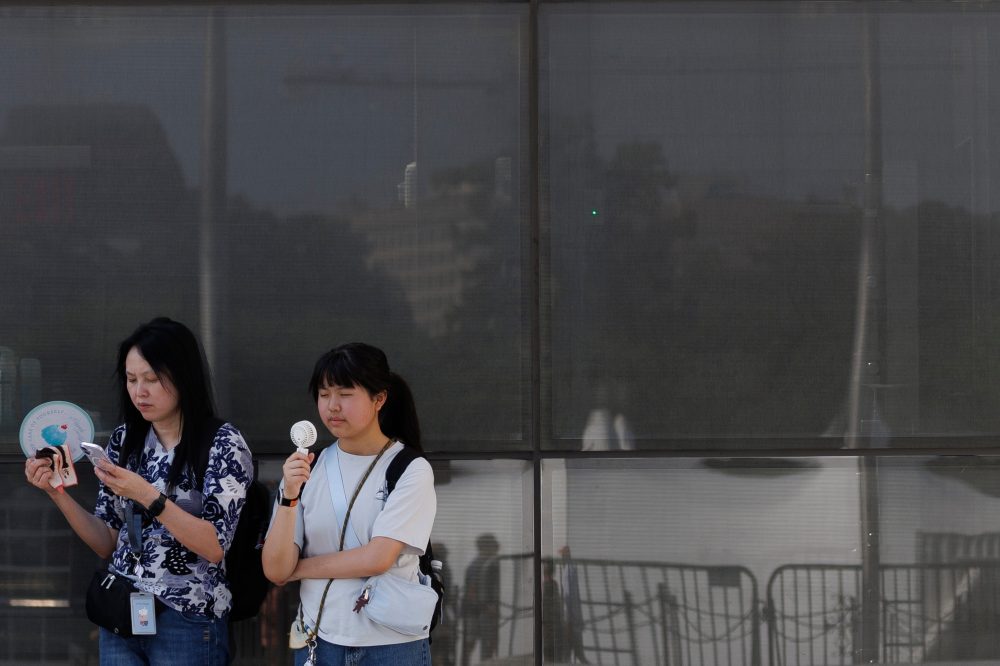
A widespread and dangerous heat wave is building across the U.S., with triple-digit highs expected in the Southwest and Great Plains this weekend before spreading eastward under a dome of high pressure that meteorologists say could trap oppressive temperatures for a week or more.
Forecasters are advising people to stay hydrated and find places to cool off, warning of temperatures 15 to 25 degrees Fahrenheit (8 to 14 degrees Celsius) warmer than normal in many areas, including at night – especially bad for people’s health because their bodies won’t have a chance to recover. The heat dome is expected to affect as much as two-thirds of the continental United States.
“The heat doesn’t necessarily stop when it’s dark out,” said Josh Adam, a meteorologist with the National Weather Service in Bismarck, North Dakota, where temperatures will surpass 100 F (37 C) until Tuesday. That is a dramatic spike for a state where summer temperatures are typically in the 80s, he said.
The National Weather Service predicts that more than 90 U.S. local temperature records will be tied or broken through Wednesday – with two-thirds of those being overnight heat records. Temperatures won’t drop below 80 F (27 C) at night in Fort Lauderdale, Florida; Miami; Tampa, Florida; Galveston, Texas; and Charleston, South Carolina, according to the forecast.
The current heat dome – formed when high pressure traps hot air while blocking cooling winds and rain – is one of the strongest to affect the Dakotas in 25 years, said Chad Merrill, a senior meteorologist with AccuWeather.
Forecasters expect record triple-digit highs this weekend in Nevada, Utah, Colorado, Wyoming, Idaho, Montana, North Dakota and South Dakota.
In Helena, Montana, where temperatures were expected to creep above 95 degrees Fahrenheit (35 degrees Celsius), Last Chance Splash Waterpark & Pool was holding a swim meet for hundreds of swimmers.
The timing couldn’t be better, as it’s uncommon for Helena to get so hot, said Sean Swingley, assistant manager.
“It’s certainly a hot day, but the pool is nice and cool,” Swingley said. “Usually in the summer we have a couple 95 degree days, but it mostly hovers around 85 to 90 in June and July.”
Nevada, a state accustomed to hot weather, is even hotter than normal, said Andrew Gorelow, a meteorologist with the National Weather Service in Las Vegas. The temperature in Las Vegas is expected to hit 111 F (48 C) on Saturday, Gorelow said.
Hydrating and finding cool spaces is critical, experts said.
They also warn the heat could spike fire risk to some parts of the country that already are dry, including the Rockies, where Merrill said dry thunderstorms could develop.
Climate change from the burning of coal, oil and natural gas is causing more intense and longer-lasting heat waves that cover larger areas, scientists say.
This year’s temperatures also are expected to be affected by El Nino, a natural warming of the equatorial Pacific that alters weather patterns and spikes temperatures across the globe.
The current El Nino – which formed last month and is too young to have affected this heat wave much – is expected to rank as among the most intense since the weather service began tracking them in 1950, experts said.
It has an 81% chance of becoming “very strong” – the top category – by fall, the the U.S. National Oceanic and Atmospheric Administration said Thursday.
___
The Associated Press’ climate and environmental coverage receives financial support from multiple private foundations. AP is solely responsible for all content. Find AP’s standards for working with philanthropies, a list of supporters and funded coverage areas at AP.org.
Brought to you by www.srnnews.com