

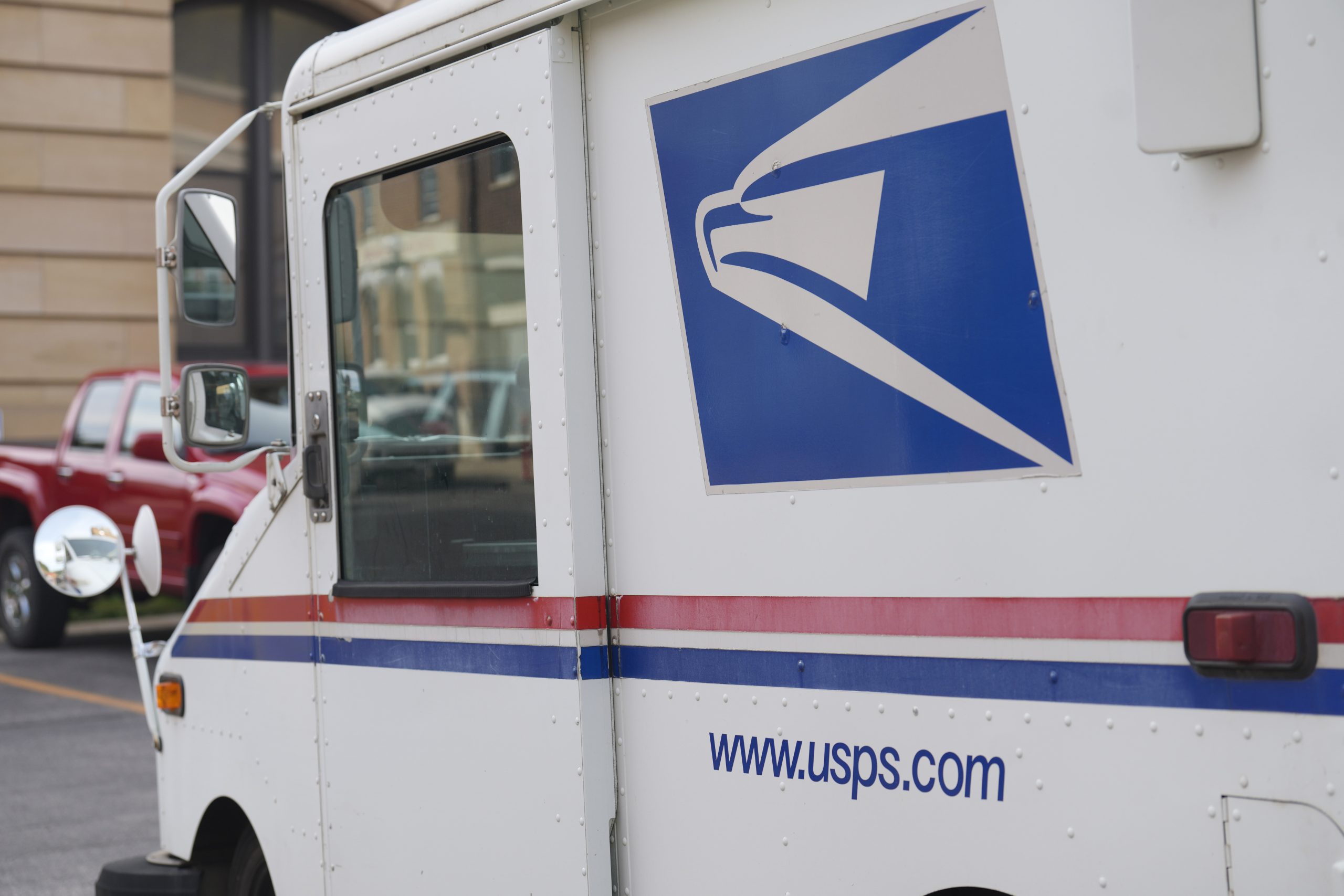
WASHINGTON-(AP) With the first midterm ballots expected to hit the mail stream roughly six weeks from now, Americans are watching the U.S. Postal Service-and the politics swirling around it. This election season is about control of Congress, but in practice, it is also about whether millions of voters can trust a system being pushed and pulled by partisan battles over mail-in voting.
President Donald Trump is seeking greater control over mail balloting through an executive order issued in March. The proposal aims to create a national voter list that would help determine who qualifies to receive a mail ballot. That idea has faced lawsuits and court rulings, and the administration is now asking the Supreme Court to allow the restrictions while legal challenges continue.
At the same time, the Postal Service is facing sharp criticism over its ability-or inability-to process ballots fast enough. Democratic officials have raised alarms after tens of thousands of ballots in California and hundreds in Wisconsin arrived too late to be counted in prior elections earlier this year. State election officials in Kansas and Michigan have responded by urging voters who want to vote early to skip the mail and instead deliver ballots in person.
The Postal Service insists it will do its job. In a Tuesday statement, it said it remains “committed to fulfilling our role in the electoral process,” adding that it provides a “secure, efficient, and effective” way for citizens to participate when mail voting is part of elections.
But conservatives have long argued that election rules should not be run by shifting political agendas or bureaucratic uncertainty. And this year, critics say the scrutiny is intensified because of Trump’s executive order and the push to use federal databases to create a national eligibility list. Democratic senators and governors have urged the agency to abandon the implementation, warning that it could delay ballots further-or block eligible voters entirely.
The political fight is also fueled by the Postal Service’s recent operational choices. Financial stress has forced the agency to consolidate mail processing into fewer regional centers, meaning that ballot mail may travel dramatically farther-according to a Brookings report, the average distance is 139 miles, and in some cases as much as 500. That matters when timing is everything.
In California, officials said changes tied to processing schedules contributed to the rejection of more than 148,000 ballots from the June primary. They reported that 63% arrived too late even with a seven-day grace period. In Wisconsin, officials said hundreds of ballots arrived too late in an April election. California officials worried ballots may have been postmarked at processing facilities the day after voters dropped them off, potentially invalidating them.
The Postal Service says postmarks are applied with automated equipment at processing centers “in the same manner and to the same extent as before.” It also says a voter can ensure a timely postmark by requesting a free postmark application from a postal worker.
For conservatives, the troubling question is not just whether mail ballots ever arrive on time-they do, often at high rates-but whether the system is being politicized and strained to the point that ordinary voters bear the risk of delays or technicalities. The Postal Service’s own Office of Inspector General has reported that in the 2024 election it handled more than 59 million pieces of ballot mail and 97.3% arrived on time. Yet the new controversy shows that even small percentages can translate into real people, real votes, and real consequences in close races.
The legal and political stakes are even higher because this administration has made mail-in voting a recurring target. Trump has repeatedly attacked mail balloting and spread allegations about “voter fraud” for years and called for election integrity.
Brought to you by www.srnnews.com