


By Hugo Lhomedet and Emma Rumney
Aug 18 (Reuters) – Fast-growing nicotine pouches have emerged as one of Big Tobacco’s most important bets on a future beyond cigarettes, offering rapid growth, attractive margins and, for now, lighter regulation than many rival smoking alternatives.
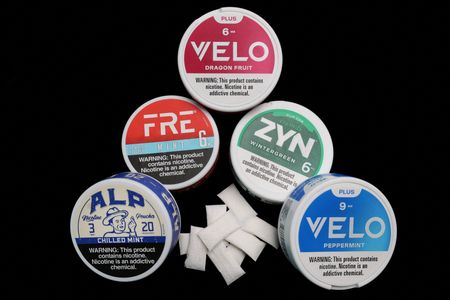
Investors are increasingly focused on whether brands such as Philip Morris International’s Zyn and British American Tobacco’s Velo can gain wider acceptance beyond Scandinavia and the United States, where oral nicotine products are already common, and become a new profit engine as cigarette sales decline.
Yet the category faces two major hurdles: persuading smokers in markets without an oral nicotine tradition to switch, and sustaining growth as regulators grow more concerned about youth uptake and marketing practices.
BAT has reported growing demand for pouches in markets including Britain and Poland, while volumes across Asia, the Middle East and Africa rose 27.5% to around 700 million pouches in the first half of 2026. That remains a fraction of the more than 3 billion sold in its U.S. and European businesses.
“I do believe that this is an engine of growth … that has the potential to replace cigarettes in the long run,” BAT Chief Executive Tadeu Marroco said in an interview, describing pouches as cheaper and easier to use than many smoking alternatives.
FAST GROWTH, HIGHER MARGINS
Pouches – small packets placed under the lip that contain nicotine but no tobacco – are growing faster than vapes and heated tobacco products, drawing investor attention at a time when demand for many consumer goods remains subdued.
BAT predicts industry pouch revenue will reach £11 billion ($15 billion) by 2030, overtaking vapes, from £4 billion in 2025. It expects 47 million pouch users by then, just over half the number of vape users.
Philip Morris said last year its U.S. pouch business generated eight times the gross profit per thousand units of its international cigarette business in 2024. By comparison, its flagship heated tobacco device IQOS generated 2.4 times as much gross profit per thousand units.
That helps explain why investors are paying close attention to the category. Jefferies analyst Andrei Andon-Ionita said tobacco company valuations are increasingly linked to pouch performance.
Pouches are also reopening opportunities for nicotine consumption, said Anthony Sedgwick, co-founder of BAT investor Abax Investments. Because they produce neither smoke nor vapour, they can be used where other products are restricted.
Philip Morris and BAT also dominate pouch sales, unlike in vaping, where Chinese rivals control much of the market, said Quilter Cheviot analyst Chris Beckett.
LESS REGULATION, FOR NOW
The U.S. Food and Drug Administration says smokers who switch completely to alternatives such as pouches, vapes and heated tobacco products may reduce their health risks.
Decades of use in Sweden and Norway suggest oral nicotine products carry substantially lower risks than smoking, though experts caution pouches are not risk-free. Other alternatives such as vapes, which have a shorter track record, face more questions over their long-term health effects.
But authorities and public health groups are increasingly concerned about youth uptake and marketing practices.
Some companies have promoted pouches through channels they generally avoid for other nicotine products, including sports and music sponsorships and free samples.
The World Health Organization says pouch uptake is being driven by aggressive marketing and high nicotine strengths that appeal to new users, and has called for tighter controls.
The WHO said in May that 160 countries still lacked specific regulations governing pouches, leaving the category less regulated in many markets than vapes or heated tobacco products.
France has banned pouches outright, Finland has introduced restrictions including plain packaging, and Britain and the European Union are tightening regulations.
BAT and PMI say they encourage appropriate regulation. But tighter rules could also slow growth, Quilter Cheviot’s Beckett said.
CAN SUCCESS TRAVEL?
The central question for investors is whether pouches can match the popularity of other products in markets without established oral nicotine traditions.
Consumers in many countries may be more comfortable inhaling nicotine than consuming it orally, Beckett said.
Jefferies’ Andon-Ionita said the lack of an oral nicotine culture outside a handful of markets was the biggest obstacle to wider adoption.
Cigarettes remain the industry’s profit engine. At Philip Morris, oral nicotine products account for just 2.6% of total volumes.
When an unexpected increase in cigarette sales helped Philip Morris beat second-quarter expectations, Bernstein analysts said investor focus on Zyn had obscured the continued importance of the company’s traditional business.
Many analysts expect pouches to contribute more to industry profits. But both BAT and PMI say smokers will need multiple alternatives.
“Adult smokers are not a homogenous group of people with the same preferences, rituals or taste,” a PMI spokesperson said, adding a diverse portfolio was key.
($1 = 0.7377 pounds)
(Reporting by Hugo Lhomedet and Emma Rumney. Editing by Matt Scuffham and Mark Potter)
Brought to you by www.srnnews.com