


By Lucia Mutikani
WASHINGTON, Nov 10 (Reuters) – US consumer prices increased more than expected in October, driven by higher costs for food and accommodation, leaving the Federal Reserve on course to raise interest rates next month.
The Consumer Price Index report from the Labor Department on Tuesday also showed a strong buildup of underlying inflation pressures for the third straight month. The Labor Department’s Bureau of Labor Statistics did not publish year-over-year inflation readings because last year’s federal government shutdown prevented the collection of consumer price data in October 2025, leaving no comparison base.
Annual consumer inflation jumped 3.7% in September. Inflation is running well above the US central bank’s 2% target.
The US-Israeli war with Iran has boosted oil prices, combining with the import tariffs implemented by the Trump administration last year to lift the cost of living. High inflation contributed to the heavy losses suffered by President Donald Trump’s Republican Party in the midterm elections last week.
Fed Governor Christopher Waller said on Tuesday that the US central bank should raise rates next month, adding that “a stronger policy move may be needed.” Waller also raised the prospect of a 50 basis point hike if core consumer prices, excluding food and energy, increased 0.3% or more from September, which they did.
“Consumers’ inflation nightmare continues with no relief in sight,” said Christopher Rupkey, chief economist at FWDBONDS. “Fed officials are going to need to bring a bigger hose if they have any hope of putting the inflation fire out.”
The CPI increased 0.4% last month after advancing 0.6% in September. It was the third consecutive month of CPI gains of 0.4% or more. Economists polled by Reuters had forecast the CPI climbing 0.3% over the month.
Shelter, which includes rents, hotel and motel rooms, accounted for more than 30% of the increase in the CPI last month. Shelter costs rose 0.3% after climbing 0.4% in September.
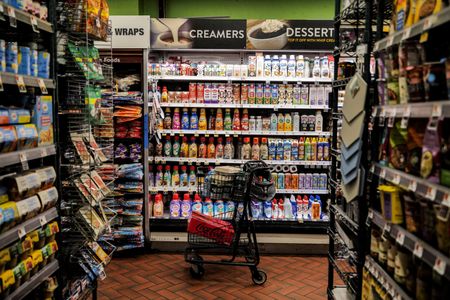
Food prices surged 0.5% after barely rising in the prior three months. Grocery store prices rebounded 0.4%, boosted by a 0.9% jump in the cost of beef. Egg prices rose 0.6% while fruits and vegetables were 0.6% more expensive. Prices for dairy and related products rose 0.6%. The cost of snacks surged 1.0%.
Higher prices at the supermarket could be a reflection of more expensive diesel fuel. The cost of eating out also increased last month, with prices of food away from home surging 0.5% after rising 0.2% in September. The cost of full service meals increased 0.7%.
Gasoline prices climbed 1.0% after soaring 9.1%. Though diesel prices have come down from record highs, they rose 2.7% last month after increasing 11.9% in September.
STRONG CORE INFLATION
Excluding the volatile food and energy components, the CPI increased 0.3% in October, advancing by the same margin for three months in a row. The so-called core CPI was forecast to have climbed 0.2% in October. Core CPI inflation increased 2.6% year-over-year in September. It was last month driven by a 0.3% rise in owners’ equivalent rent, a measure of the amount homeowners would pay to rent or would earn from renting their property.
Prices for hotel and motel rooms rose 0.6%. Airline fares rose 0.4%. The cost of recreation increased 0.8%, while motor vehicle insurance advanced 0.7%. Household furnishings and supplies prices rebounded 0.7%, suggesting that some pass-through from tariffs remained. There were also increases in the prices of new vehicles, medication and recreation goods.
Financial markets were pricing in a roughly 89% chance of a 25-basis-points rate hike next month. The Fed left its benchmark overnight interest rate in the 3.75%-4.00% range last month. Economists said only a substantial sell-off on the equity markets or widening credit spreads would prevent the Fed from tightening monetary policy in December.
US stocks opened lower. They slumped last week after the Democrats’ sweeping victory fanned fears that new regulations could dent the durability of the AI trade, but rallied on Monday as oil prices fell. The dollar gained versus a basket of currencies. US Treasury yields rose.
The missing data from last year have no impact on the calculation of the Personal Consumption Expenditures Price Index readings that are tracked by the Fed to gauge progress toward its inflation target. Both measures are running above 3%.
(Reporting by Lucia Mutikani; Editing by Paul Simao and Chizu Nomiyama)
Brought to you by www.srnnews.com