
By Ann Saphir and Michael S. Derby
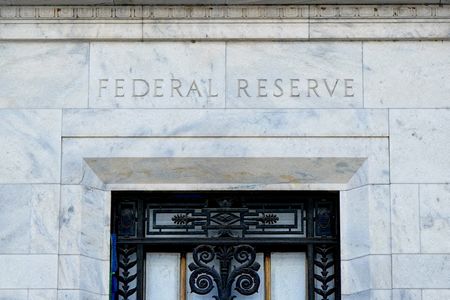
WASHINGTON, July 28 (Reuters) – The bar for a Federal Reserve interest rate hike this week is likely higher than reflected in rate futures markets, not only due to cooler-than-expected inflation data and another lull in hostilities between the U.S. and Iran but also because markets will view a single increase as signaling more moves are coming.
Going into the July 28-29 policy meeting, just the second one led by Fed Chairman Kevin Warsh, the U.S. central bank had left its benchmark policy rate unchanged in the 3.50%-3.75% range since December. The probability for a hike this week, as reflected in rate futures prices, had been growing on the renewed rise in energy prices and the hawkish intonations of a number of Warsh’s colleagues.
If history is any guide, though, when the Fed hikes or cuts rates after an extended hold, it keeps going in the same direction for at least a few meetings, and policymakers may not be quite ready to send that signal.
“They don’t usually do a one-and-done, so it really means … the (policy) committee has to decide whether they’re going to commit to a sequence of rate increases,” said James Bullard, who led the St. Louis Fed from 2008 until 2023 before becoming the dean of the Mitch Daniels School of Business at Purdue University. “I don’t think they’re ready to do that at this meeting.”
HAWKS VERSUS DOVES
At the Fed’s June 16-17 meeting, Warsh’s first as head of the central bank, all 18 of his colleagues supported the decision to leave the target for short-term borrowing costs unchanged, despite a few who, even then, saw the case for a rate hike.
In the weeks since, the hawkish case has lost a little steam. Consumer prices rose 3.5% in June from a year earlier, the Bureau of Labor Statistics reported earlier this month, still high but down from 4.2% in May as a U.S.-Iran ceasefire lowered fuel prices. Trend inflation, estimated by stripping out volatile energy and food prices, also eased, with the core Consumer Price Index measure dropping to 2.6% from 2.9%. The influential head of the New York Fed expressed some conviction earlier this month that the trend would continue.
The labor market, meanwhile, has remained on solid ground. Job growth slowed sharply in June, but the gain of 57,000 in nonfarm payrolls was above what economists estimate is the so-called break-even rate where there are enough jobs generated to keep up with workforce growth. The unemployment rate ticked down to 4.2%. Hourly wage growth was 3.5% on a year-over-year basis, suggesting the labor market was not contributing to inflation.
Warsh, though quiet on his own rate-path views, has said he believes productivity growth may allow for faster economic expansion without stronger price pressures.
Still, the underlying reasons prompting half of the Fed policymakers at the June meeting to pencil in a higher policy rate by the end of this year remain intact. Inflation has been running above the Fed’s 2% goal for more than five years, and it reaccelerated in the first half of this year. Oil prices shot upwards again this month as the ceasefire in the Middle East war fell apart, rekindling inflation concerns that some economists and Fed policymakers worry are already broadening beyond fuel and grocery prices, particularly as investment in artificial intelligence supercharges demand in some sectors of the economy.
The Fed will announce its policy decision at 2 p.m. EDT (1800 GMT) on Wednesday following the end of a two-day meeting. Most economists say they expect at least one and as many as three dissents from policymakers favoring a rate hike, laying the groundwork for the start of a sequence of rises in borrowing costs in September unless inflation takes a decided turn for the better before then.
“September remains our base case for the first hike,” analysts at Capital Economics wrote last week. “By then, the Fed should have greater evidence that strong goods price pressures are not fading, despite the easing of tariff effects. Moreover, a September hike is now fully priced into markets, which Warsh has stressed will be an important steer for policy decisions under his chairmanship.”
Some analysts, however, see a case to get going now, especially if the new Fed chief is as serious about containing inflation as he has stated. “We doubt Warsh would face widespread opposition if he argued for tightening. The final decision could go either way, but we think the Fed is more likely to raise rates by 25 basis points on Wednesday than to stand pat,” analysts at Wrightson ICAP said.
ONCE THE FED HIKES, IT USUALLY KEEPS GOING
An isolated Fed rate hike is rare. The last time the central bank raised rates without delivering another one soon after was in 2015, but it wasn’t for lack of trying, with policymakers led by then-Fed chief Janet Yellen repeatedly promising “normalization” after years of a near-zero policy rate. It took a year for policymakers to feel the economy was strong enough to handle more rises in borrowing costs, but eventually they got there.
The one clear exception was in March 1997, the only interest rate adjustment of the modern era that was sandwiched by moves in the opposite direction. Transcripts from that meeting show that while then-Fed Chairman Alan Greenspan felt “the odds are better than 50/50” that the central bank would raise rates again, he preferred markets not make that presumption, and took the unusual step of issuing a statement to announce the move.
The minutes of each subsequent meeting that year did note a “firming” bias, but in the end inflation never accelerated enough to force the Fed to follow through. Ultimately, the shock of Russia’s debt default and the near-failure of a prominent U.S. hedge fund triggered a series of rate cuts starting in September 1998.
At this week’s meeting, markets are pricing about a one-in-three chance of a hike. Economists say it’s worth looking beyond a single meeting for a read on what’s actually at stake.
“The real discussion is whether the Fed will start a proper hiking cycle, which is typically delivered through at least three hikes, or not hiking at all,” analysts at Bank of America wrote.
(Reporting by Ann Saphir and Michael S. Derby;Editing by Dan Burns and Paul Simao)
Brought to you by www.srnnews.com