



WASHINGTON (AP) – President Donald Trump says he has reached the “parameters” of a deal with Middle East allies aimed at ending the Iran war-while, for now, holding off on fresh U.S. strikes that could further inflame an already dangerous conflict.
In a Saturday evening post on social media, Trump said that the emerging agreement would include the immediate, complete, and total opening of the Strait of Hormuz, alongside an end to what he described as Iran’s nuclear threat. He said he agreed to cancel attacks “for the future benefit of the WORLD” and “likewise, the survival of a successful and prosperous Iran,” adding that the pause would last only so long as Washington could rapidly make a deal.
Trump’s message also indicated Israel would join the U.S. in pushing to finalize the understanding. Iran, meanwhile, offered no immediate public response.
The announcement marks another sudden turn in a war now about five months old-one that has repeatedly shifted in purpose, timing, and intensity. When the United States and Israel began strikes on Feb. 28, the stated objectives included destroying Iran’s missile capabilities, preventing Iran from obtaining a nuclear weapon, and ending support for allied armed groups across the region. But the administration’s timeline and operational targets have come under strain, as the conflict has swung between negotiations and escalation.
In mid-June, an interim agreement halted fighting and was intended to clear the way for a permanent accord. That truce, however, did not hold. Within weeks, Iran resumed attacks on shipping transiting the Strait of Hormuz-one of the world’s most strategically vital waterways and a lifeline for global energy markets. Those disruptions contributed to new instability across the region and increased fears of a widening conflict.
Saturday’s development comes after days of sharply mixed signals from the White House and growing concern among U.S. officials that the conflict could spiral further. The president’s comments to reporters earlier this week suggested he was nearing a decision to resume heavy military strikes. U.S. officials, according to reports, were on edge during the buildup to Trump’s Saturday statement-especially given how quickly the administration has moved from deterrence to escalation, and from escalation back to negotiations.
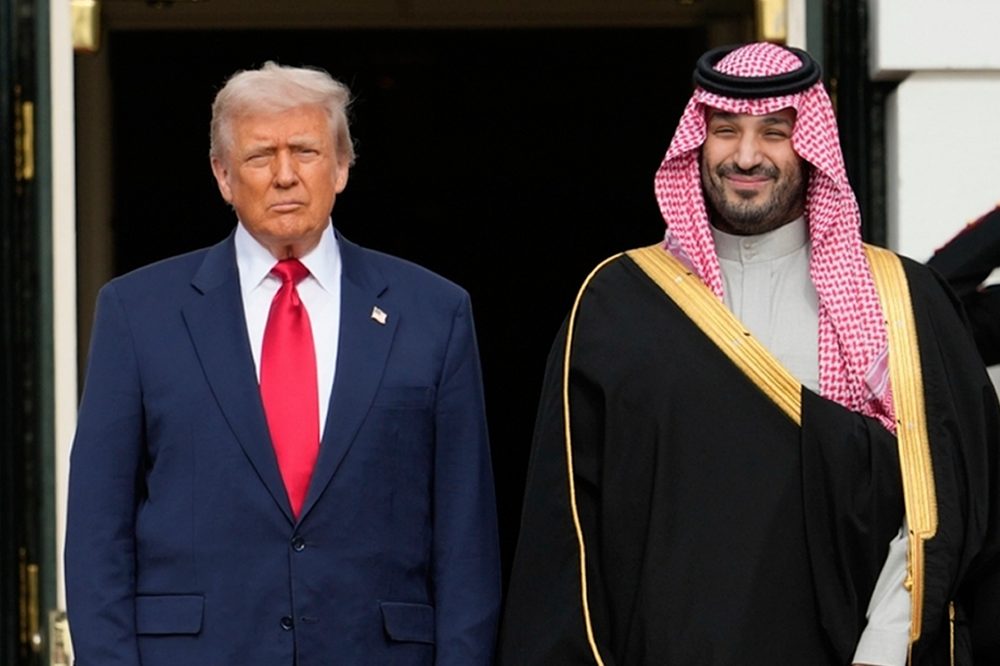
According to a report, the announcement followed Trump’s call with Saudi Crown Prince Mohammed bin Salman earlier Saturday. A person familiar with the conversation said the Saudi leader raised concerns about the possibility of U.S. escalation and sought clarity on what steps Washington might take next. The concern, as described, centered on whether the U.S. might target Iran’s energy infrastructure-such as bridges, power plants, or other sites whose destruction could prompt Tehran to retaliate by striking energy infrastructure across Saudi Arabia and other Gulf countries.
Saudi Arabia has not only been a key regional partner, but also a vocal advocate for an endgame that leads back to negotiations. The kingdom recently joined the U.S. in striking multiple logistics and weapons sites used by Iranian-backed militias in Iraq. Even so, Saudi leaders have continued urging U.S. and Iranian talks aimed at ending the conflict without pushing the region into a broader conflagration.
The diplomatic alignment matters because, some analysts believe deterrence alone cannot solve the problem; it must be paired with leverage, clear objectives, and a disciplined pathway to a durable settlement. Trump’s framing-cancelling attacks contingent on quickly finalizing a deal-fits that approach. Rather than treating military force as an open-ended campaign, the administration is presenting strikes as bargaining leverage, with the stated off-ramp tied to concrete outcomes: open shipping through Hormuz and a verifiable end to Iran’s nuclear ambitions.
Trump’s frustration has been evident. Friday, he told reporters the U.S. just wants to “win” in Iran and that the country will be hit “very hard” until Iran can’t take it anymore. White House press secretary Karoline Leavitt echoed the message, pointing to a sequence of alleged breaches: a memorandum of understanding on a truce signed earlier, followed by attacks on commercial ships and the killing of American soldiers.
Meanwhile, violence in and around the Gulf has continued to underscore the urgency. Kuwait’s military said its forces responded to Iranian drone attacks, with drones striking vital facilities including a government structure in the country’s north. There were no reported casualties. The British Navy reported that a tanker was struck and another explosion occurred near a vessel in the Strait of Hormuz off the coast of Oman, again with no casualties reported. Additional reports described an unknown projectile hitting a vessel near Oman and damage to the engine room. Further incidents included explosions and splashes reported near another tanker in the region.
Taken together, Saturday’s claim of deal parameters is best understood as a pivot from escalation toward outcome-driven bargaining-an attempt to translate U.S. pressure into concrete terms that protect American interests and secure the region’s critical trade corridor.
Whether that pivot holds will depend on whether Iran and its partners accept the deal’s core benchmarks, and whether implementation can begin rapidly enough to prevent the next cycle of attacks-on ships, on infrastructure, and, potentially, on American forces. For now, Trump says the shooting can pause. The question is whether the incentives for a real settlement are strong enough to keep the conflict from flaring again.
Brought to you by www.srnnews.com