


WASHINGTON (AP) In the Middle East, tensions involving the United States, Iran, and regional partners are escalating once again-after a brief stretch of relative calm.
In Baghdad, the U.S. military says it has completed what it calls a heavy wave of strikes against Iran. The campaign, launched early Thursday, was carried out in response to an earlier Iranian missile attack on a U.S. base in Jordan-an attack that, officials say, crossed a clear line and demanded a decisive American response.
According to U.S. Central Command, over a two-hour period, American forces struck dozens of targets tied to Iran’s Revolutionary Guard Corps. Those targets included military command centers, as well as missile and drone facilities. Central Command also cited attacks on coastal surveillance and defense sites-an indication that Washington is focusing not only on immediate weapons capability, but on the broader infrastructure that Iran and its proxies rely on to project power and threaten U.S. interests.
The new barrage follows coordination with Saudi Arabia, with the United States and the Kingdom targeting Iran-backed militias operating in neighboring Iraq. U.S. officials say the strikes killed at least 20 fighters and six Iranian advisers, underscoring the wider regional nature of this conflict-one in which Iran’s influence is being felt through partner networks rather than only direct state-to-state attacks.
President Donald Trump, meanwhile, has vowed that the United States will strike Iran “very hard,” after the Jordan incident involving troops stationed there. In remarks at the Oval Office, he said it was “our turn to hit them,” framing the latest actions as retaliation and deterrence-rather than escalation for its own sake. His message to Tehran was blunt: the United States will not accept attacks on American forces and allies without consequence.
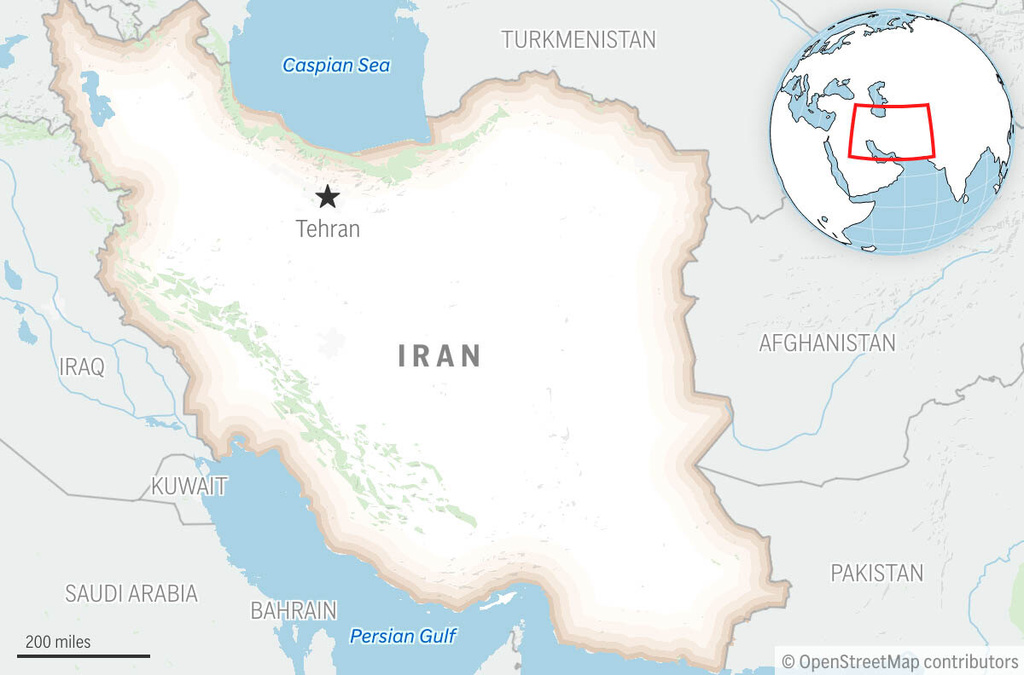
Iranian state media says the retaliatory strikes produced new disruptions across the region. Officials reported two injuries from attacks on the island of Qeshm in the Strait of Hormuz, and additional explosions reported in Khuzestan province. Taken together, these reports suggest Iran is not only absorbing strikes, but also responding with attempts to show resilience and signal that the conflict is spreading beyond one battlefield.
The situation is also intensifying in maritime domains, with reported fires aboard natural gas vessels at Egypt’s port of Damietta. British maritime security firm Ambrey says drone strikes ignited those fires, and it remains unclear who is responsible. There are also reports of attacks involving a U.S.-owned floating storage facility and a Greek-owned tanker, with no injuries reported-another sign that the struggle is increasingly reaching shipping lanes and energy infrastructure.
Officials and analysts warn that flare-ups on multiple fronts raise the risk of a return to all-out war. The broader backdrop is a five-month conflict that has already jolted the world economy and remains unpopular among Americans. There are also concerns that continued operations may strain U.S. stockpiles of sophisticated munitions needed to defend bases and partners-meaning every strike carries strategic weight, not just tactical impact.
Egypt, a key American ally and a regional mediator, has been spared direct military action so far. But if Iran or its allied forces launch a confirmed strike there, observers say it would mark a significant widening of the conflict-one that could draw more countries into a spiraling confrontation.
Saudi Arabia, too, says it has been facing threats from Iran-backed networks. The Kingdom accused Iraqi militias of firing drones against Saudi oil facilities over the past two days. Iraqi groups initially denied the accusations, while Yemen’s Houthi rebels-also tied to Iran’s broader axis-announced separate attacks on Saudi energy facilities as part of their own campaign. Together, these developments show the conflict is not confined to a single theater; it is increasingly linked across borders by shared tactics, messaging, and supply channels.
In a related diplomatic move, Saudi Defense Minister Khalid bin Salman met separately with Trump and Vice President JD Vance. Sources say the purpose of the message was twofold: first, to make clear that Saudi Arabia will not tolerate attacks on its oil industry and critical infrastructure; and second, to emphasize that the Kingdom wants de-escalation and renewed negotiations between Washington and Tehran.
Still, mediators have reportedly been attempting to restore calm. An interim agreement recently collapsed after renewed fighting in the Strait of Hormuz-an essential waterway for global energy flows that Iranian actions have again effectively threatened. A regional official says efforts continue behind closed doors to bring both sides back to the negotiating table and reestablish a ceasefire.
Meanwhile, the economic consequences are already visible. Oil prices jumped sharply following the renewed hostilities. Brent crude rose more than seven percent to around eighty-eight dollars per barrel-another reminder that the world markets are paying for instability in real time.
In a final development, the Strait of Hormuz remains a central flashpoint. Iran’s deputy foreign minister says Tehran rejected a proposal from Oman to jointly manage ship traffic through the strait, describing the idea as unacceptable. Iran’s position is that the waterway should not return to prewar conditions-meaning the pressure on shipping and regional navigation is likely to remain part of Iran’s strategy.
Brought to you by www.srnnews.com