
By Daniel Wiessner
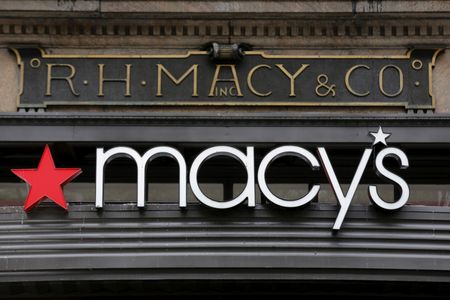
June 15 (Reuters) – The U.S. Supreme Court declined on Monday to hear a challenge by Macy’s to a National Labor Relations Board decision requiring the retailer to compensate employees who the company fired in a case in which the company sought to roll back the agency’s power to order such action.
Macy’s had appealed a lower court’s decision upholding the labor board’s action. Macy’s had asked the justices to resolve a split among federal appeals courts over the NLRB’s authority to require that companies found to have illegally fired employees make those workers whole for any related financial losses.
The NLRB is facing dozens of cases across the United States challenging its structure and in-house enforcement proceedings, as well as the agency’s longstanding protections against presidential interference in its decisions.
The NLRB in 2023, during Democratic President Joe Biden’s administration, decided that Macy’s acted unlawfully when it locked out and fired about 60 unionized building engineers in Nevada and California after they ended a strike over stalled contract negotiations. It also required Macy’s to post notices informing workers of their rights.
The board ordered Macy’s to reimburse the workers for any monetary harms caused when they were fired, and said it would determine at a later time whether any further remedies were appropriate.
The NLRB in a 2022 decision involving Thryv, a small business marketing software company, said it would begin ordering employers to reimburse workers for “direct and foreseeable” financial losses stemming from a company’s illegal conduct, such as credit card fees or out-of-pocket medical expenses.
Previously, the only money remedies the board ordered in cases involving unlawful labor practices were lost pay and benefits. But in the Thryv case, a Democratic board majority said that practice had for decades been shortchanging workers whose lives can be upended if they are unlawfully disciplined or fired.
Macy’s is one of dozens of businesses that have challenged the expanded remedies, claiming that they are no different than the compensatory damages typically sought in private lawsuits. Macy’s said that such remedies by the NLRB violate the right spelled out in the U.S. Constitution to a jury trial, in this instance to have jurors rather than a government agency decide whether they owe damages.
After Macy’s challenged the NLRB’s action, the San Francisco-based 9th U.S. Circuit Court of Appeals decided that the agency has discretion to award remedies that vindicate the public interest by restoring the status quo that existed before an employer broke the law.
Three other federal appeals courts have disagreed, ruling that Congress intentionally limited the scope of the board’s authority to matters directly involving the application of federal labor law.
The U.S. Chamber of Commerce and other business lobbying groups in a brief sided with Macy’s in urging the Supreme Court to take the case.
Republican President Donald Trump’s appointees to the NLRB are expected to overturn the agency’s Thryv ruling and a series of other decisions by appointees of Democratic presidents that favored workers and unions. The NLRB’s policies tend to shift as presidential administrations change and new appointees from the president’s party reshape its priorities.
The five-member board currently has a 2-1 Republican majority and two vacancies. Under a longstanding policy, three votes are needed to reverse existing board precedent. Trump has nominated a veteran labor lawyer, James Macy, to provide the key third vote.
(Reporting by Daniel Wiessner in Albany, New York, Editing by Will Dunham and Alexia Garamfalvi)
Brought to you by www.srnnews.com