

By Howard Schneider
WASHINGTON, June 24 (Reuters) – The U.S.-backed war against Iran touched off fears of stagflation last spring, but most company finance chiefs in a recent Federal Reserve survey said the resulting spike in energy costs prompted only small price hikes of their own and had little impact on their firm’s demand.
The most recent quarterly survey of chief financial officers released on Wednesday showed inflation remained a top concern nationally, alongside muted optimism for the economy as a whole and a drop in expected growth in U.S. economic output to 1.8% from 2.1% in the last CFO poll.
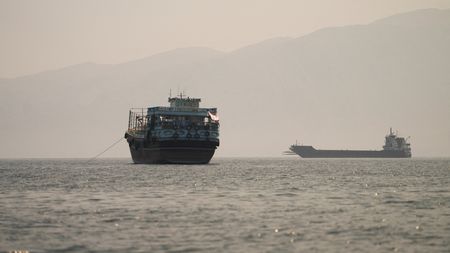
CFOs were more optimistic about their own firm’s prospects than in the prior survey, according to the poll covering more than 500 firms nationwide and fielded from May 18 to June 5 by the Federal Reserve banks of Richmond and Atlanta in conjunction with Duke University’s Fuqua School of Business. Hiring plans remained steady, and while firms foresaw both costs and prices rising around 4.7% this year, that was premised on oil prices of around $90 a barrel – above market prices that fell after a ceasefire and reopening of the shipping lanes through the Strait of Hormuz.
“If in fact this is basically the end of the upward pressure on energy prices, it is not likely to be a significant inflationary impulse going forward,” with the most pronounced price increases limited to the firms most exposed to oil as an input cost, Brent Meyer, an Atlanta Fed vice president and head of the bank’s survey research, said in an interview. “If oil futures markets are right, and everything ends and we’re back down to $70 or $75 a barrel, that is good news” and suggests energy’s contribution to inflation eases over time.
Of the firms polled, two-thirds said the oil shock had increased unit production costs but only one-third reported raising prices. More than 70% of firms said that demand for their goods and services had not changed by much or actually increased, consistent with ongoing consumer spending and a sense among economists that the fallout from the war, on the U.S. economy at least, had been limited.
The open question is whether the conflict in the Middle East is truly at a stopping point, and, if so, how long it takes for global oil shipments and reserves to rebuild to prewar levels.
POLICYMAKERS EYEING OTHER INFLATION MARKERS
Some Fed policymakers are concerned that inflation is stuck above the central bank’s 2% target not just because of shocks from oil or, earlier, from rising taxes on imports, but for other reasons that could make it harder to bring down.
Even as oil prices have declined in recent days, investors and some major banks have boosted bets that the Fed will raise interest rates as soon as the September meeting. Economists polled by Reuters expect new inflation data to be released on Thursday to show that the Fed’s preferred Personal Consumption Expenditures price index rose 4.1% in May, while the “core” index stripped of the influence of energy and other volatile commodities rose 3.4%, higher than the month before and well above the central bank’s target.
Prices for services, which form the bulk of U.S. consumer spending, have been rising in the 3.5% range for more than a year, about a percentage point more than was common in the years before the COVID-19 pandemic.
The Fed held interest rates steady at its meeting last week but new projections showed half of U.S. central bank policymakers now anticipate a rate increase this year, while all but one of the others who submitted a projection see the policy rate remaining in the current 3.5% to 3.75% range – a stark shift in a year that began with expectations borrowing costs would fall.
“We’ve been dealing with an inflation problem that’s well above the target and has been going the wrong way,” Chicago Fed President Austan Goolsbee said on Monday on the Marketplace radio program. “There are some signs, like the fact that some of the inflation came from tariffs and that’s supposed to be one and done, that we could get some resolution in the Middle East and maybe that inflation would go away…The fact that we’ve seen it in services, which historically is pretty persistent, is a little more disturbing.”
Meyer said he felt it also was too early to draw a bottom line on the impact of the war, at least until it is clear oil prices will remain around where they are. CFOs’ expectations about unit costs and prices for this year were set assuming oil remains close to where it has been trending, but survey questions about alternate price scenarios indicate firms would pass along further unit cost increases on a nearly one-for-one basis.
“There’s basically fewer and fewer levers they have left to pull on the cost side before they really are forced to push through price increases,” he said.
(Reporting by Howard Schneider; Editing by Andrea Ricci )
Brought to you by www.srnnews.com