


By Leigh Thomas
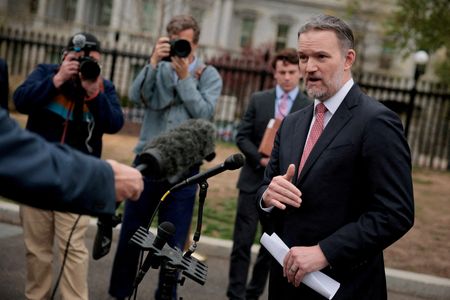
PARIS, June 4 (Reuters) – The United States will respect the tariff caps in trade deals struck with the European Union, Japan and others and planned new U.S. tariffs over forced labour provide the legal basis to do so, U.S. Trade Representative Jamieson Greer said on Thursday.
“We understand that a deal is a deal,” Greer told reporters on the sidelines of an OECD ministerial meeting in Paris.
The U.S. has struck deals with the European Union and Japan that limit U.S. tariffs on most imports from those places to a maximum of 15%.
However, Greer’s office on Tuesday unveiled a new set of tariffs on multiple countries after determining that they failed to curb trade in goods made with forced labour. The EU would face a 10% tariff and Japan 12.5%. A further investigation into excess manufacturing capacity could see overall tariffs on the two economies’ goods push well past 15%.
Greer, talking about the EU trade deal, said the agreement acknowledged that the United States could impose tariffs “up to a certain level” and that the so-called ‘Section 301’ unfair trade practices investigations gave U.S. President Donald Trump the authority to do so.
The U.S. launched the Section 301 investigations to rebuild Trump’s emergency tariffs, which were struck down by a U.S. Supreme Court decision in February.
Greer said findings from the second investigation should come within a matter of weeks, adding that the examination was complex.
The U.S. Trade Representative said Washington would “marry up” the findings from its investigations against some of the agreements.
“These two things can coexist,” he said. “We can try to resolve these unfair trade barriers and unfair trading practices that are occurring overseas that we’re identifying in these investigations, and hopefully there’s a way to square it with all of these deals that are really important for us and for our trading players.”
Greer said the Trump administration has been very clear from the outset that it was concerned with forced labour and a failure of countries to take effective action.
(Reporting by Leigh Thomas, writing by Philip Blenkinsop; Editing by Toby Chopra)
Brought to you by www.srnnews.com