


By Joseph Ax
Oct 1 (Reuters) – Some New York lawmakers are urging a revamp of the state’s sexual assault statutes to make it easier to prosecute cases involving intoxicated victims, following renewed outrage over an alleged 2024 gang rape at a Cornell University fraternity house.
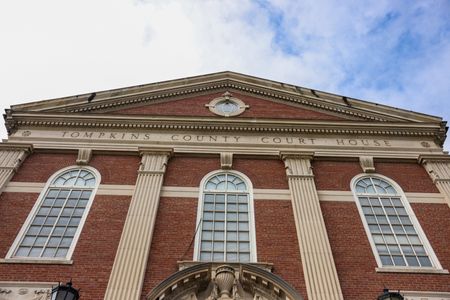
The Tompkins County district attorney, Matthew Van Houten, said this week that his office initially declined to pursue charges against the students accused of raping the woman partly due to the constraints of current New York law.
The law makes a distinction between sexual assault victims who became intoxicated voluntarily, as the alleged Cornell victim appears to have done – by willingly consuming alcohol or drugs, for instance – and those who were given intoxicants without their consent or knowledge. Only the latter can be considered “mentally incapacitated” and therefore unable to consent.
As a result, it can be more difficult to bring certain rape charges in a case when the victim chose to consume intoxicants, even if doing so affected their ability to agree to a sexual act, according to experts and advocates.
“It’s essentially a get-out-of-jail-free card in some situations,” said Stefan Turkheimer, vice president for public policy at the anti-sexual assault nonprofit Rape, Abuse and Incest National Network (RAINN). “It says, if someone is sexually assaulted because they got too high or too drunk, it’s their fault.”
State Assemblyman Jeffrey Dinowitz, who has sponsored legislation for years aimed at closing what he describes as loopholes in the law, is again pushing a bill that would allow rape to be charged if a perpetrator reasonably should have known a victim was unable to consent because of intoxication.
“Rape is the only crime that I’m aware of where, if the victim was drunk, they may not get justice,” he said in an interview. “There shouldn’t be any difference in terms of the survivors of sexual assault between the people who are voluntarily intoxicated and who are involuntarily intoxicated.”
GRAND JURY TO CONSIDER CASE
Dinowitz and State Senator Nathalia Fernandez, who co-sponsored the legislation, are due to hold a press conference on Thursday in New York City to rally support for the bill.
The renewed legislative push comes just days after Van Houten said he would reopen the investigation after the alleged victim filed a civil lawsuit against seven Chi Phi fraternity members as well as the university and several other defendants.
According to the lawsuit, fraternity brothers plied her with alcohol and ketamine and then sexually assaulted her after she became incapacitated.
Noting the public outcry, Van Houten issued a lengthy explanation for why his office did not pursue criminal charges in 2024 after the woman reported her allegations to campus police.
According to Van Houten, the woman, a 20-year-old student at the time, did not claim she was involuntarily intoxicated, physically forced or unconscious, or that she had clearly expressed that she did not consent – all state law provisions that determine whether a crime can be charged.
“In this case, multiple prosecutors and criminal investigators reviewed Jane Doe’s statement and correctly determined the alleged facts as set forth in the statement do not constitute a crime,” he wrote.
However, Van Houten said he would now present the case, including testimony from the woman, to a grand jury for possible indictment.
The woman’s lawyer, Thomas Giuffra, has said the 2024 statement and the lawsuit were not materially different and faulted prosecutors for not investigating further two years ago.
Dinowitz and Fernandez’s bill has passed the state Senate more than once over the years but has yet to receive a floor vote in the Assembly. Dinowitz said he hoped the public anger over the Cornell case would pressure lawmakers to ensure its passage.
Nineteen states, including New York, consider mental incapacitation only in cases where the victim was involuntarily intoxicated, according to Elizabeth Jeglic, a sexual abuse expert and professor at John Jay College of Criminal Justice in New York.
“It doesn’t make sense,” she said. “If you’re incapacitated, you’re incapacitated, regardless of whether you consumed it yourself or somebody else gave it to you without your consent.”
The interim executive director of the national Chi Phi fraternity said in a statement on Wednesday that the Cornell chapter voted unanimously to expel accused members three days after the police report was filed in 2024, and that the national organization also expelled them soon thereafter.
“These actions went beyond anything the law or Cornell University required of us,” said the director, Trey Robb. “They failed to meet the standards we set for every brother, and accountability is how we will always respond to behavior that falls short of those standards.”
Cornell has defended its handling of the case, saying it investigated it and imposed discipline on the accused students ranging from suspensions to expulsions.
New York Governor Kathy Hochul said on Wednesday that Cornell had agreed to her request to hire an outside law firm to launch a fresh investigation.
(Reporting by Joseph Ax; Additional reporting by Maria Tsvetkova; Editing by Paul Thomasch and Daniel Wallis)
Brought to you by www.srnnews.com