



JEFFERSON CITY, Mo. (AP) – Missouri’s congressional map remained unsettled Tuesday after dueling court decisions created new uncertainty just eight weeks before Election Day, while a federal judge moved to preserve the districts used in the August primary and prevent what he called potentially chaotic changes before November.
U.S. District Judge Stephen Clark, appointed by President Donald Trump, temporarily barred Missouri from using its old congressional districts in the general election. His order came shortly after the U.S. Supreme Court declined to intervene in a Missouri Supreme Court decision requiring the old districts to be used instead of a new map backed by Trump and Republican state officials.
Clark’s order is set to remain in effect for 14 days, allowing additional proceedings and an appeal to the 8th U.S. Circuit Court of Appeals. The competing rulings have left voters, candidates and local election officials uncertain about which districts will govern the November election.
Missouri Attorney General Catherine Hanaway said the state was prepared to follow Clark’s order, which she said requires officials to use the new congressional boundaries.
Republican Secretary of State Denny Hoskins, Missouri’s chief election official, called the federal ruling a victory because it prevents what he described as a “full-on constitutional crisis.” He quickly informed local election officials that they must use the new map.
The new districts were used during the August primary, and election officials have already certified the winners. Hanaway and Clark have argued that switching maps after the primary would create serious problems, potentially invalidating the basis on which candidates ran and voters cast ballots.
“Using a different map for the general election would wreak havoc on the fairness and orderliness of Missouri’s congressional elections,” Clark wrote, warning that widespread voter confusion would follow.
Opponents of the new map, however, contend that the federal judge cannot override Missouri’s highest court. Attorney Chuck Hatfield, representing People Not Politicians, the group that sponsored a referendum petition challenging the map, said the state Supreme Court’s order remains binding.
The group filed a request seeking to hold Hoskins in contempt for directing election officials to use the new districts. The Missouri Supreme Court scheduled arguments for Thursday.
The dispute centers on a redistricting plan adopted after Trump urged Missouri officials to redraw the state’s congressional boundaries ahead of the midterms. Republican Gov. Mike Kehoe called a special legislative session last year, and lawmakers approved a map intended to strengthen Republican prospects.
The plan particularly targeted Missouri’s 5th Congressional District, represented by Democratic Rep. Emanuel Cleaver of Kansas City. It moved portions of Kansas City into neighboring Republican-held districts and extended the remaining district eastward into more rural, Republican-leaning areas. According to an Associated Press estimate, about 59% of the district’s voters were new under the revised boundaries.
Republican state Sen. Rick Brattin won the GOP primary in the reshaped district and joined a federal lawsuit seeking to preserve the new map. He praised Clark’s decision and said he would continue campaigning.
The Missouri Supreme Court previously ruled that the new districts never became law because thousands of petition signatures demanding a statewide referendum had been submitted. The court concluded that Missouri’s constitutional provision allowing referendums on “any act” of the Legislature applies to congressional redistricting.
Hoskins subsequently placed the referendum on the November ballot as Proposition A.
The final outcome could influence the balance of power in Congress. Republicans have pursued new maps in several states, hoping to gain as many as 16 House seats, while Democrats are seeking gains from maps approved in California and Utah. In Missouri, the courts-not voters or candidates-may determine which political map appears on the ballot.
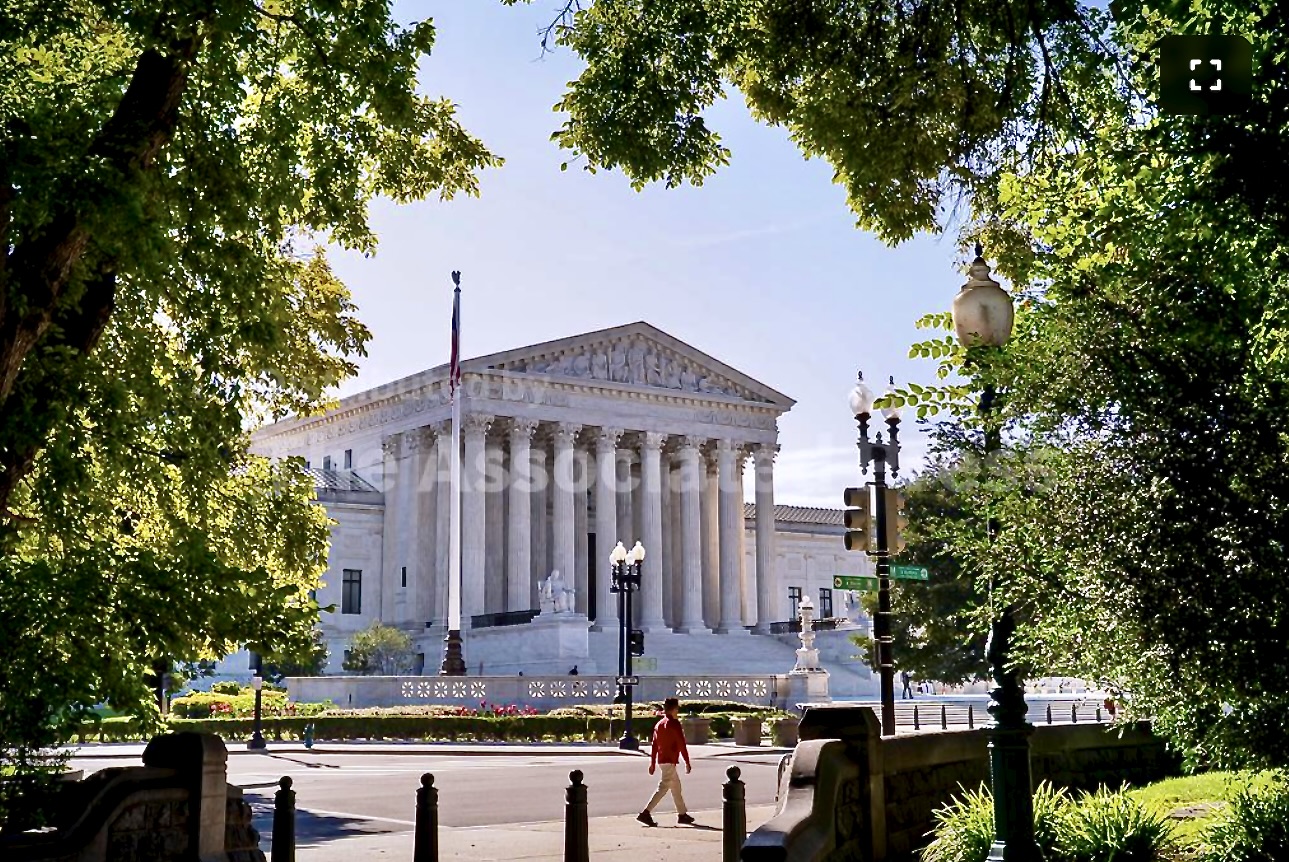
PHOTO- FILE – The Supreme Court is seen on the morning after the conservative majority sided with the Trump administration in a case over President Donald Trump’s executive order restricting mail-in voting, on Capitol Hill in Washington, Tuesday, Aug. 25, 2026. (AP Photo/J. Scott Applewhite, File)
Brought to you by www.srnnews.com