



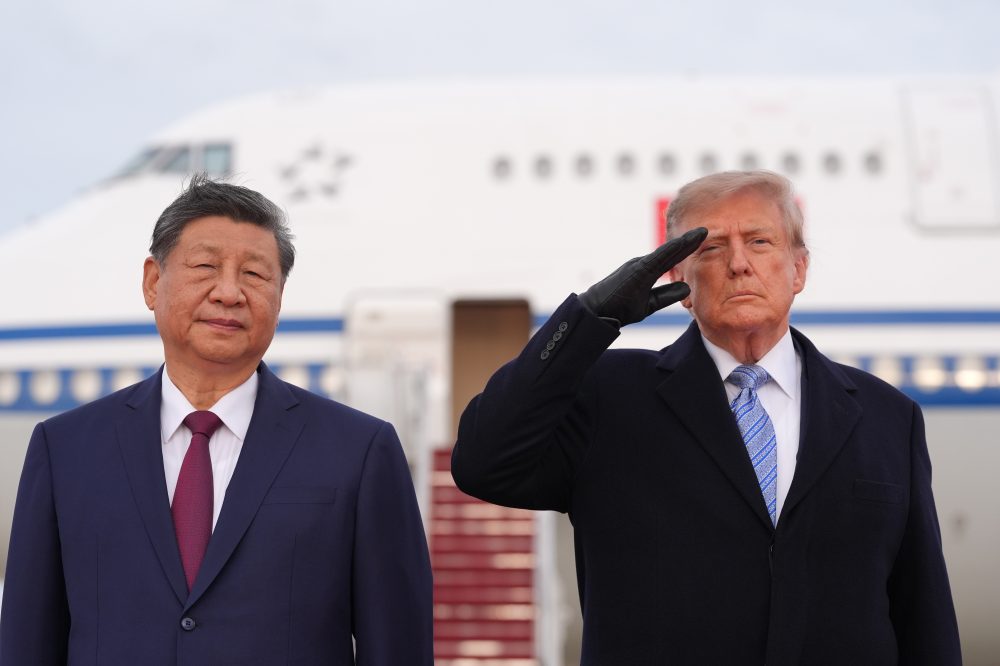
Presidents Donald Trump and Xi Jinping have no shortage of difficult issues to cover when they sit down for talks Thursday at the White House. The leaders are tackling issues like trade irritants, artificial intelligence safeguards and the war in Iran. Trump wants China to use its influence with Iran, while Xi seeks a halt to U.S. arms sales to Taiwan. A fragile trade truce had been set to expire in November, but the two countries agreed Wednesday to extend it for two months.
Also, a federal judge temporarily blocked Trump’s ban on three news outlets from the White House grounds, ordering early Thursday that CNN, MS NOW and Politico must have their access restored. The ruling hands the outlets at least a temporary reprieve in what has been an extraordinary showdown between Trump and media outlets whose coverage he dislikes.
Here’s the latest:
The ritzy black-tie event honoring Xi will be held in the White House East Room, featuring décor that “draws on the color red’s longstanding cultural significance throughout Chinese history,” first lady Melania Trump said as she released key details.
Tables will sport rich red linens and be set using the Reagan-era china service, with its alternating gold and red bands. Urns will overflow with red blossoms.
Dinner will begin with a toast honoring the historic “Toast to Peace” between President Richard Nixon and China’s Premier Zhou Enlai in Beijing in 1972.
The menu includes sesame-crusted sea bass served with braised bok choy and roasted eggplant, and White House honey ice cream for dessert.
American tenor Christopher Macchio, who sings at Trump events, will lead the after-dinner entertainment. Musicians from the U.S. military will also perform.
China’s commerce ministry said Thursday that Beijing will maintain close communication with the U.S. following their first dialogue on artificial intelligence.
The ministry’s comments at a regular news conference came after U.S. Treasury Secretary Scott Bessent and Chinese Vice Premier He Lifeng held economic and trade talks in New York. The ministry did not give out further details about the AI dialogue. However, Bessent said earlier that the U.S. proposed a notification mechanism between the two countries for national security-related AI incidents.
The two countries on Wednesday also agreed to extend their trade truce set to expire on Nov. 10.
A federal judge temporarily blocked Trump’s ban of three news outlets from the White House grounds, ordering early Thursday that CNN, MS NOW and Politico must have their access restored.
The ruling hands the outlets at least a temporary reprieve in what has been an extraordinary showdown between Trump and media outlets whose coverage he dislikes.
Trump first announced he was banning the outlets Friday, assailing what he called “fake news,” and only later arguing that their reporting was a risk to national security. The outlets argued in a joint lawsuit that the ban was a blatant violation of the First Amendment because it singled them out for the content of their coverage.
In his late-night ruling, U.S. District Judge Timothy Kelly ordered the White House to “immediately return, reinstate, and restore” the three outlets’ access. He said they had met the legal thresholds to obtain a temporary restraining order, in effect for 14 days, and were likely to succeed in showing that their press passes were revoked without due process.
▶ Read more
Presidents Donald Trump and Xi Jinping have no shortage of difficult issues to cover when they sit down for talks Thursday at the White House.
China has resisted the Trump administration’s urgings – and economic threats – to use its considerable leverage to prod Iran to agree to U.S. terms to end the nearly seven-month war. Xi wants to see Trump permanently halt arms sales to Taiwan and loosen export restrictions on cutting-edge advanced chips. And the two sides on Wednesday agreed to extend a one-year trade truce set to expire Nov. 10 for two months, kicking the can on finding a more durable agreement.
All the while, both leaders seem to believe time is on their side as they look to outmaneuver the other in what’s expected to be the world’s most significant economic and national security competition for years to come.
▶ Read more
Brought to you by www.srnnews.com